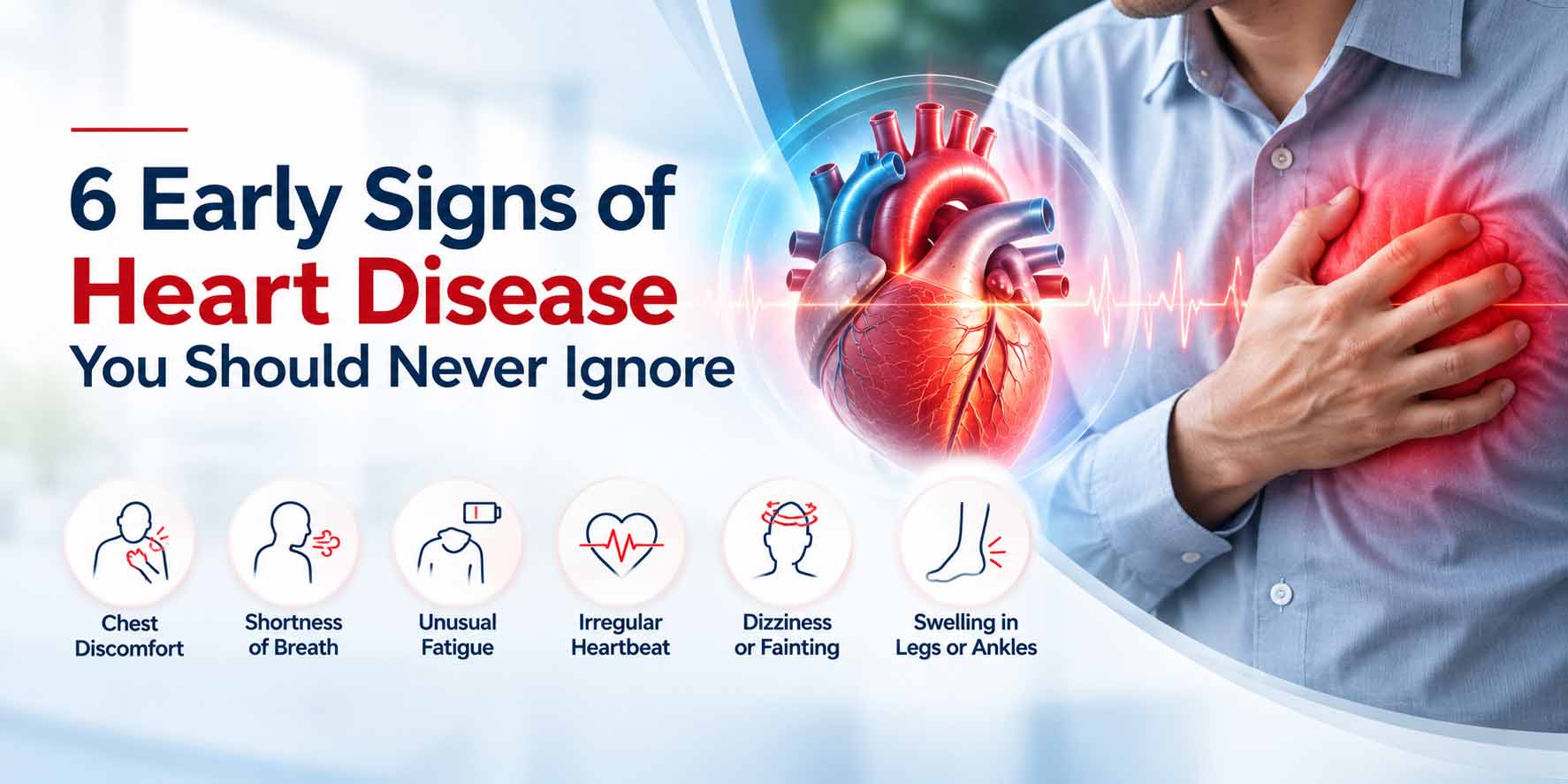
6 Early Signs of Heart Disease You Should Never Ignore
Heart disease does not always begin with a sudden or severe episode. In many people, the body may show subtle warning signs before a serious heart problem becomes apparent. These symptoms can sometimes be mistaken for stress, tiredness, indigestion, or the effects of ageing.
Recognizing changes in your body and seeking timely medical advice can help identify certain heart conditions earlier and allow appropriate treatment to begin.
Here are 6 early signs of heart disease you should never ignore.
1. Chest Pain, Pressure, or Discomfort
Chest discomfort is one of the most important symptoms associated with heart problems. It does not always feel like severe pain. Some people describe it as:
-
 Pressure or heaviness in the chest
-
Tightness or squeezing
-
Burning or aching
-
A feeling of fullness or discomfort
-
Pain that appears during physical activity and improves with rest
Heart-related discomfort may also spread to the arm, shoulder, back, neck, jaw, or upper abdomen.
Chest pain has many possible causes, but new, unexplained, recurring, or worsening chest discomfort should not be ignored.
2. Shortness of Breath
Are you getting breathless while climbing stairs, walking a short distance, or performing activities that previously felt easy?
Unexplained shortness of breath can sometimes be associated with heart disease, particularly when the heart is unable to pump blood effectively.
Breathlessness may occur:
-
During physical activity
-
While resting
-
When lying flat
-
During sleep, causing you to wake up feeling short of breath
If you notice a new or persistent change in your breathing, consider discussing it with a doctor.
3. Unusual or Persistent Fatigue
Everyone feels tired occasionally. However, unexplained or excessive fatigue that interferes with normal activities deserves attention.
You may notice that everyday activities such as walking, shopping, climbing stairs, or completing household work suddenly require much more effort than before.
Persistent fatigue can have many causes, including sleep problems, anaemia, thyroid disorders, infections, and stress. It can also occur with certain heart conditions, particularly when accompanied by breathlessness, chest discomfort, dizziness, or swelling.
4. Heart Palpitations or Irregular Heartbeat
Feeling your heart racing, pounding, fluttering, or skipping beats is known as a palpitation.
Occasional palpitations can occur for several reasons and are not always dangerous. However, frequent or persistent palpitations may be related to an abnormal heart rhythm.
Seek medical evaluation especially when palpitations occur along with:
-
Chest discomfort
-
Shortness of breath
-
Dizziness
-
Weakness
-
Fainting or near-fainting
An ECG and, when appropriate, longer heart-rhythm monitoring may help determine the cause.
5. Swelling in the Feet, Ankles, or Legs
Swelling in the feet and ankles can occur for many reasons. However, persistent swelling may sometimes be associated with the heart not pumping efficiently, allowing fluid to accumulate in the body.
Pay particular attention if swelling occurs together with:
-
Shortness of breath
-
Unusual fatigue
-
Reduced exercise tolerance
-
Rapid weight gain
-
Difficulty breathing while lying down
Persistent or worsening swelling should be evaluated rather than simply attributed to standing for long periods or ageing.
6. Dizziness, Lightheadedness, or Fainting
Feeling dizzy occasionally may be caused by dehydration, low blood sugar, medications, or other common conditions. But repeated episodes of unexplained dizziness, lightheadedness, or fainting can sometimes be related to cardiovascular problems.
Abnormal heart rhythms and certain structural heart conditions can affect the amount of blood reaching the brain.
Fainting associated with chest pain, palpitations, or shortness of breath requires prompt medical attention.
Who Should Be Extra Careful?
It is particularly important to pay attention to cardiovascular symptoms if you have risk factors such as:
-
High blood pressure
-
High cholesterol
-
Diabetes
-
Smoking or tobacco use
-
Obesity or being overweight
-
Physical inactivity
-
A family history of premature heart disease
-
Increasing age
Having one or more risk factors does not mean that you will develop heart disease, but it can make regular cardiovascular assessment more important.
When Should You Consult a Cardiologist?
Consider seeking medical advice if you experience new, persistent, recurring, or worsening symptoms, particularly chest discomfort, unexplained breathlessness, palpitations, swelling, dizziness, fainting, or a noticeable decline in your ability to perform normal activities.
Depending on your symptoms and risk factors, your doctor may recommend tests such as an ECG, echocardiogram, blood tests, stress testing, or other cardiac investigations. The appropriate tests vary from patient to patient.
When Is It an Emergency?
Do not wait for a routine appointment if you develop symptoms suggestive of a heart attack, particularly chest pressure or pain, severe shortness of breath, fainting, cold sweating, nausea, or discomfort spreading to the arm, back, neck, or jaw.
Seek emergency medical care immediately.
Take Your Heart’s Warning Signs Seriously
Heart disease can sometimes progress without obvious symptoms, while in other cases the warning signs may be subtle enough to overlook.
The key is not to panic over every symptom, but also not to repeatedly dismiss unexplained changes in your health. Early medical evaluation can help determine whether your symptoms are heart-related and what treatment or preventive measures may be appropriate.
Consult Dr. Kush Kumar Bhagat
If you are experiencing symptoms such as chest discomfort, breathlessness, palpitations, unexplained fatigue, dizziness, or swelling in your legs, consider scheduling a cardiovascular evaluation with Dr. Kush Kumar Bhagat.
A timely heart check-up can help identify potential cardiovascular problems and guide the next steps based on your individual health and risk factors.
Disclaimer: This article is intended for general health education and should not be considered a substitute for professional medical diagnosis or treatment. If you experience severe chest pain, significant difficulty breathing, fainting, or symptoms suggestive of a heart attack, seek emergency medical care immediately.


